International Kung Fu Association
Great Grandmaster Wong Fei Hung
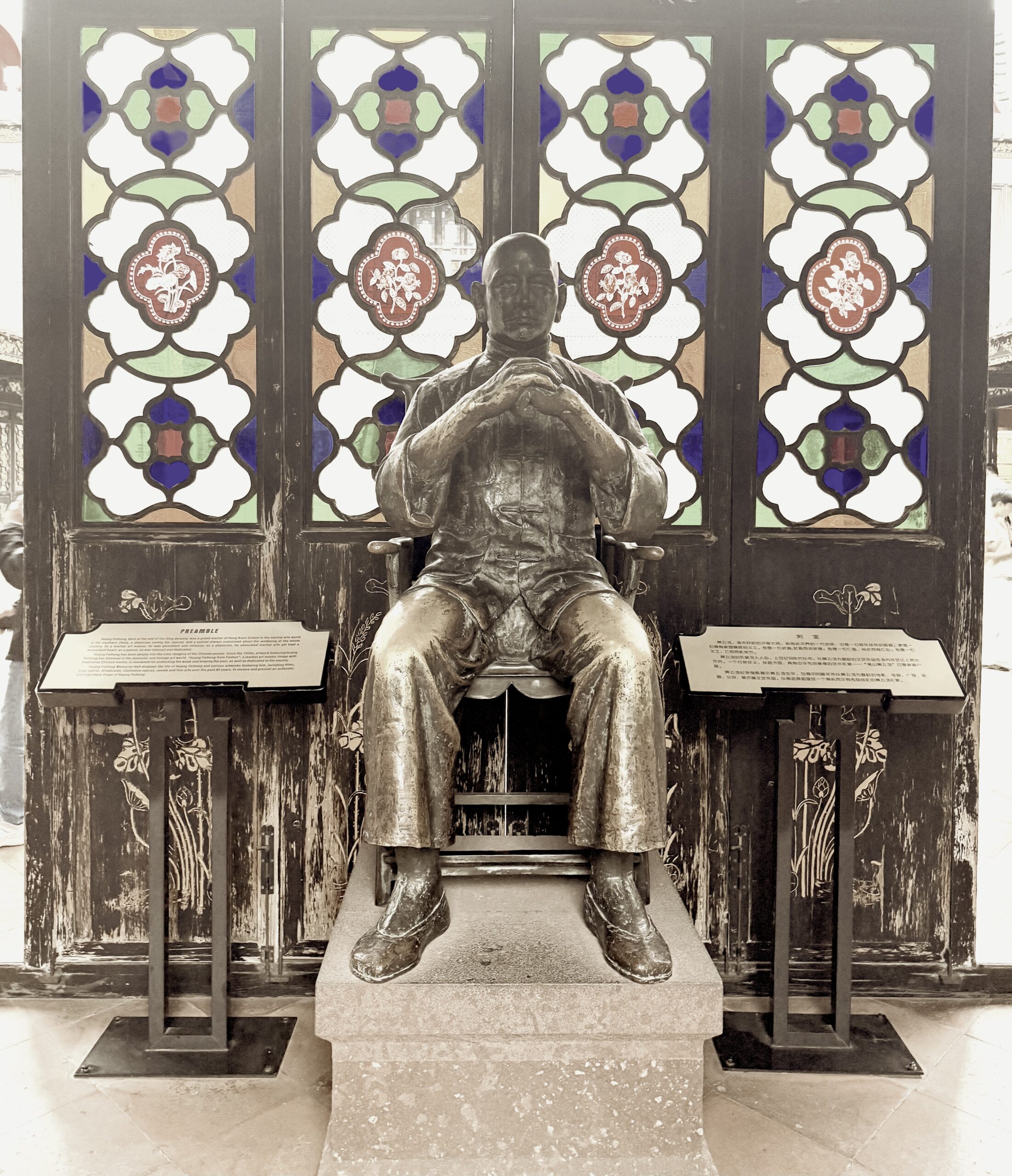
Great Grandmaster Wong Fei Hung
· A Hero across Ten Thousand Miles; Righteousness lasting a Thousand Autumns ·
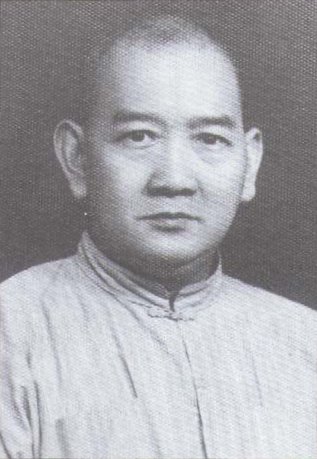
The legendary Grandmaster Wong Fei Hung (黃飛鴻) was born on August 27th, 1850, and died on April 17th 1925. His original name was Wong Si Chang (黄锡祥), with middle name Da Yuan (达云), he was from the village of Liu Zhou Xiang (陆洲乡), in the borough of Xi Qiao (西樵), Nan Hai (南海), Guangdong province.
He learned Hung Ga from his father Wong Kei Ying (黄麒英), of the Southern Shaolin temple Hung Kuen - Luk Ah Choi (陆亚彩) lineage, and also from a student of Tit Ku Saam (铁桥三), Lam Fook Sing (林福成) of the Gok Yuin Shaolin temple lineage. Wong Kei Ying and Tit Kiu Saam were two of the Ten Tigers of Canton in the late Qing dynasty. Later on, Wong Fei Hung exchanged knowledge with Song Fai Tong (宋辉镗), because he saw his excellent kick.
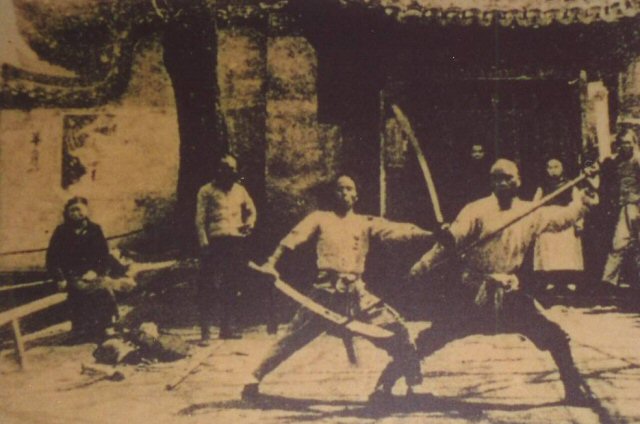
He offered the Iron Wire form (铁线拳) and Gung Ji (工字拳) to learn the Mo Ying Gerk (无影脚), the famous shadowless kick. Wong Fei Hung took what he learned from these great artists, stripped it down to its essentials, and created something new. During his time, this was called the New or Orthodox Hung Ga style in the martial forest.
Great Grandmaster Wong Fei Hung became well known for his long and active presence in the martial forest. Battle-seasoned and widely respected, he was regarded as a glorious and outstanding figure of his time. His Kung Fu talent was extraordinary, as was his bravery and Mo Duk (武德) or martial virtue. He insisted that his students would learn virtue before martial arts. He never bullied the weak and always tried to tame people with virtue. He was very open-minded and stated that anybody could be a Sifu, no matter the gender, as long as they were good at martial arts.
He was one of the first teachers openly accepting female students and to also have a female lion dance team. He promoted martial arts, fought for the right causes, helped and protected people. He healed many with his knowledge of Chinese medicine, and didn't charge if the recipient was poor. He was, and is, a great example for martial artists.
In 1868, Wong Fei Hung followed his father to Guangzhou (广州) and Seung Duk (顺德) performing martial arts and selling medicine in the streets. It was during this time that he used the Four Season Flying Dragon pole to defeat a famous martial artist Jeung Tai Hong's (郑大雄) Left-Handed Fishing Pole. He then became known as the 'Young Hero'.
In 1872, he moved to Canton, and workers in a brass and iron factory association paid for Wong to open a school at Chut Po Soi Geurk (七步水脚). Henceforth, Wong Fei Hung's life as a street performer was finished. Lei Qing Bo (李澄波) and Dai Gao Yi (大旧二) came to challenge him in his school and were defeated. He then became quite famous. His original school's location was on Lung Juen Lou (龙津路), Chut Po Soi Geurk. The original building had two floors, and faced East, it was made of brick and sand, 10m x 5m. Its external appearance was very old, and was registered as a dormitory in the Canton City census. The building no longer remains but would have been in the now-called Lai Wan (荔湾区卷) district.
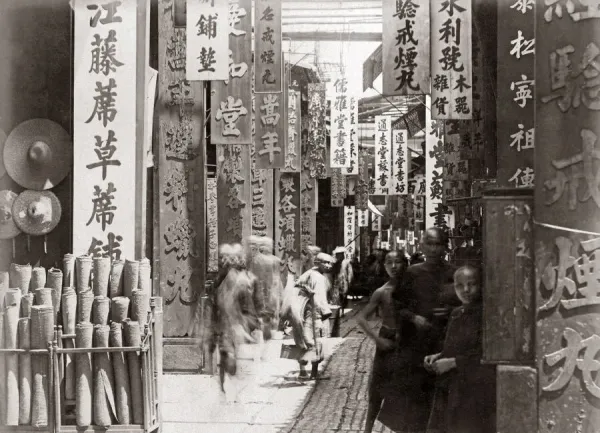
In January 1886, General Lao Wing Fook moved to Guangzhou. Not long after this, Wong Fei Hung's father died, shortly followed by General Wu Chuet May (吴全美). In the midst of his grief, Wong Fei Hung quit his position as Martial Art Instructor for the army and opened the famous Po Chi Lam (宝芝林) clinic on Yan On Street (仁安街). In the West Gate area, Wong Fei Hung's school and clinic was one of the most famous Martial and Medical establishments.
This is even more remarkable as there were around one hundred schools in the area at the time, some of these famous schools were: Sifu Go Gai's Choy Lee Fut Hung Sing Kuen, Dai How Lou's Tin Guang Wushu Kuen, Wong Sa district's Fu Lik Mou Kwoon, Hap Moon Lao Choy Lee Fut Hung Sai Kuen, Lei Yan Mou Kwoon, Wong Lou Lek Mou Kwoon and Boon Tong village Nan Yiu Ting Mou Kwoon, to name some of the more well-known ones. Three of the Ten Tigers also had schools nearby, Tit Kiu Saam taught across the river in Sai Tai (西堤), Wong Yan Lam taught in Wong Sa and Bak Mei Grandmaster Cheung Lai Chuen (張禮泉) was situated at Dai Tong Road. Also during this period, Lam Sai Wing's school and Tang Fong's Yi Yung Tang school were in Cheung Sao Wow.
In 1888, Wong Fei Hung became the Martial Instructor and Doctor of General Lao Wing Fook (刘永福), and then the Chief Instructor for his army. During the first Sino-Japanese war (1894-1895), the Buk Yeurng (北洋水师) navy was destroyed by the Japanese, the Qing government surrendered and gave Taiwan to them.
Wong Fei Hung followed General Lao and his elite group of Black Flag soldiers to fight in Taiwan. He insisted on going to the front-line. In Ga Yi (嘉县) city, he led the soldiers, fought at the front and cleared a minefield by triggering detonations. The Qing dynasty did not provide any food, money or weapons, and so the soldiers, fighting even without bullets, lost the battle. Both General Lao and Wong Fei Hung survived and returned to Canton.
Grandmaster Wong Fei Hung taught a wide range of Hung Ga forms, including Gung Ji Fuk Fu Kuen (工字伏虎拳), Fu Hok Seung Ying Kuen (虎鶴雙形拳), Ng Ying Kuen (五形拳), Tiet Sing Kuen (鐵線拳), Ng Lung Ba Gwa Gwan (五郎八卦棍), Hueng Yuet Darn Dao (行月單刀), Yu Ga Dai Pa (瑤家大扒), as well as weapons like Fei To (飛鏢) and Seung Yuin Bing (雙節鞭). Wong himself was very good at the tiger style and was nicknamed Fu Qi, meaning Crazy Tiger. Over all of his years and battles, he apparently never lost a fight.
He had many famous students: Leung Foon, Chan Din Biu (nicknamed Gwai Geurk Chut - Ghost Kick Seven), Ling Wan Gai (凌雲階), Lam Sai Wing (林世榮), Tang Fong (鄧芳), Mok Gwai Lan (莫桂蘭), Tang Sau King (鄧秀寬), Lok Jing Gong, Sui Low Ngan (蘇老恩), Sui Low Yuk (蘇老玉), Chit Gai Foon, Mok Man Ging (莫文敬), Hah Jon Man.
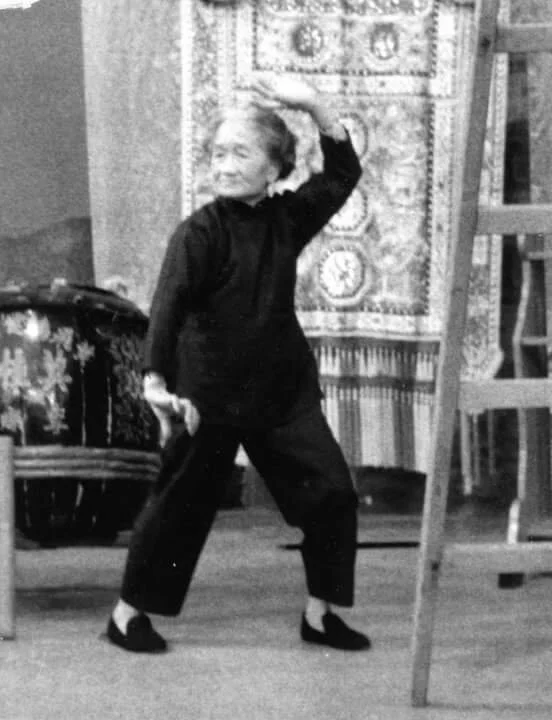
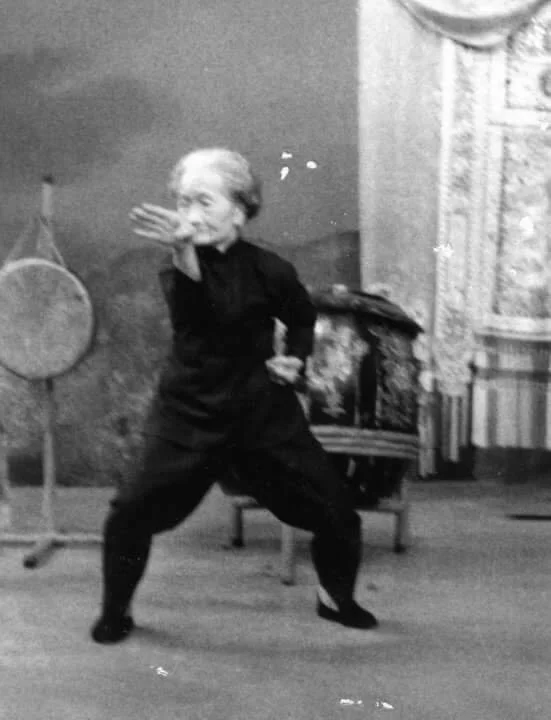
As a doctor, his medicine was very effective and he specialised in bone-setting techniques. In Guang Xu (1871-1908), when he opened Po Chi Lam clinics in Canton and Foshan,The four most famous doctors for Dit Da medicine were called the “Four Big Doors”. They are still remembered now, they were: Zhou Hong Gong, Lei Gam Chuen, So Hut Yee and Wong Fei Hung.
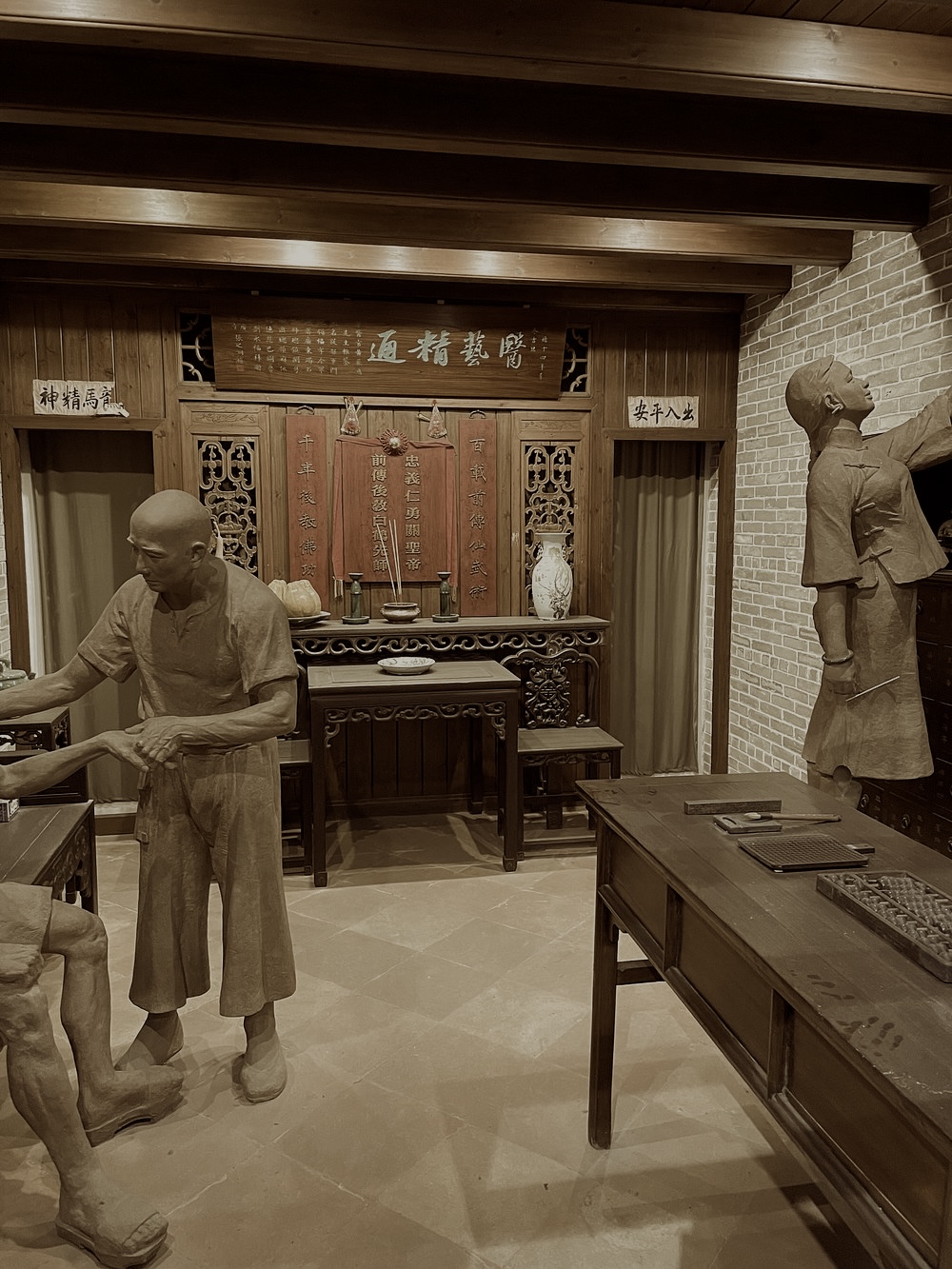
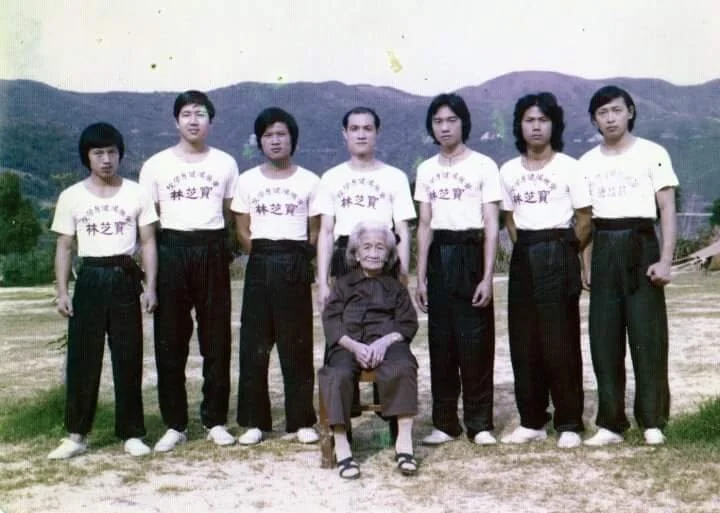
Wong Fei Hung married four times. His first wife, Law (罗氏), died after just three months of marriage, and his second wife Ma (馬氏) also died but not before giving him two sons: Wong Horn Lam (黄汗林), Wong Horn Saam (黄汗森). He outlived his third wife as well, with whom he had two more sons: Wong Horn Siu (黄汗枢) and Wong Horn Hai (黄汉熙). People would say that he was cursed, marrying him meant certain death. Because of this, when he married his last wife Mok Gwai Lan, he would call her Tip (concubine) and not Tai (wife), even though she was his wife. Mok Gwai Lan was eighteen years old when she married Wong Fei Hung. When she was younger, she learnt Mok Ga Kung Fu from her family, and after marrying Wong Fei Hung, she also learnt his style of Hung Ga. She was his student by day and wife by night, but he didn't treat her any differently from the others. He trained her hard and she progressed very quickly. In his later years, Mok Gwai Lan took care of him with great care and devotion.
Of his four sons, the second, Wong Horn Saam, became the most famous, having learnt the most Kung Fu from his father. He worked as a security guard for Bou Seung Wai Lei (保商卫族) and one of his colleagues was nicknamed Gwai Yan Leung (鬼眼梁), meaning Ghost Eye Leung. He challenged Wong Horn Saam, saying that he was not afraid of him but he was afraid of his father. Wong Horn Saam took the challenge and beat him with two techniques. This was the day of the moon festival and Leung was very angry. He made Wong Horn Saam drink a great deal of wine and then shot and killed him, claiming it was self-defence in order to avoid punishment. Wong Fei Hung knew that Martial Arts cost him his life and swore never to teach his sons Kung Fu again. Consequently, Wong Horn Hei, his youngest son, did not learn any Hung Ga and was not involved with martial arts at all, even though he looked most, like his father.
In October 1924, there was a union strike in the Xi Guan area. Many houses were burned down, including the Yan Wan Gai Po Chi Lam clinic. Wong Fei Hung lost everything. His eldest son, Horn Lam, was also affected and lost his job. Not long after this, Wong Fei Hung became sick. He died on April 17th 1925 at the Xing Zai Form Bin hospital (方便医院) in Guangzhou.
Before he died, he implored his wife to re-open the Po Chi Lam clinic. In 1946, Mok Gwai Lan reopened the school on Gou Xi Da Road, in Hong Kong. Years later, she also opened in his name the Guo Shu Kwoon (黄飞鸿国术馆) and Gin Sun Hok Yuin (黄飞鸿健身学院), or Healthy Exercise School.
Wong Fei Hung also produced many famous students and disciples. The following are some of his famous disciples: Lian Foon - His #1 disciple. Famous for cracking the ground under his feet when he sat in horse stance, Ling Wan Gai - Famous for his "Gwai Gerk" (ghost kicking skills), Chan Din Biu, Lam Sai Wing - Famous for his saber techniques and writing 3 books on Hung Ga, Tang Fong - famous for his strict, rigorous training and his stubborn "Old Square Mind" mentality, Sui Low Ngan, Sui Low Yuk, Tak Gan Jow, and Luk Jin Gun amongst others.
Services
Our Style
School Locations
Copyright © 2025 Yee's Hung Ga International Kung Fu Association.
All rights reserved.
USA Headquarters - 68 Union Ave, Clifton, NJ 07011
+1 (973) 772-8988